In search for the ‘Heart of Anamaduwa’

Posted by Sean Stephen on May 13 th, 2013 in Accommodation

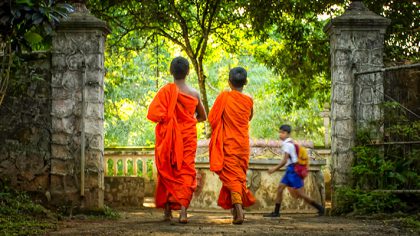
The heart of a country lies deep down in its roots, and can be challenging to find in a world that is constantly and rapidly evolving. Many would say that time travel is impossible, but is it really? Because I found a place where time really has stood still.

 
© Sean Stephen

© Sean Stephen


It was my first visit to Anamaduwa with the Red Dot Team and based on what I had heard in the past from colleagues who’d been to The Mud House, about two hours north of Colombo, I was really looking forward to it. The biggest question was would I be able to survive two nights away from civilization, without things that we today consider as basics – my phone, TV, motorized transport and coffee?

 
© Sean Stephen

© Sean Stephen


Despite the fact that we reached The Mud House a quarter past midnight, much later than we had intended, Tom and Kumar the owners of Mud House still gave us the warmest of welcomes and ushered us with torches on a walk through the shrub jungle for our dinner. The dining area looked quite medieval owing to the kerosene lamps and candles that lit the vast dining space.

 
© Sean Stephen

© Sean Stephen


Once we destroyed our dinner, we were each shown to our huts. Mine was outside the main compound and as a result we boarded a Mud House tuk tuk for our last form of motorized mode of transport.

 
A small oil lamp led the path to my hut, quite a large mud structure supported by wooden pillars. The hut was furnished with two hammocks, a swing chair and table, along with two beautiful double beds complete with a netted covering to keep the bugs out.
 
We were shown to our shower and toilet areas that were each positioned in two opposite directions not too far from our hut. With the toilet having just three walls with the front opening out to the jungle, and the shower area being only concealed by a single row of coconut leaves, it would definitely take some getting used to!
 
Despite Anamaduwa being one of the country’s warmer regions, it didn’t matter that we didn’t have a fan – the cooling properties of the clay walls combined with the coconut leaf thatched roof ensured I had a snug night.
 

The next day after a healthy herbal soup (Kola Kanda) and one of the best and simplest of local breakfasts we made our way on our bicycles to a large ground where the staff of Mud House along with the villagers had a full day of Avurudu (Sri Lankan New Year) Games prepared for us.

 
© Sean Stephen

© Sean Stephen


With games like ‘Kotta Pora’ a pillow fight where two contestants have to maintain their balance on a log while trying to knock their opponent off, tug of war and Kana Mutti, where a blindfolded participant has to find their way to a row of clay jars and smash the one with the lotus flower inside, the games were all planned masterfully and traditionally. By the end of the day we were all knackered and to help us rejuvenate, we were all brought cups of Iramusu Tea, a herbal drink that has a multitude of benefits that includes the purification of blood and helps with developing a clean system.

 
© Sean Stephen

© Sean Stephen


At the end of the games, rather than being gifted with the usual cheap gifts you’d expect at a sports event, the winners were gifted jars of local condiments from the village such as Lime Pickle, Achcharu aka Sri Lankan Pickle (consisting of pickled onions, chillies, and other goodies) and also something truly special – a bottle of pure wild bees honey (together with waxy bits). To me the honey was the pick of the lot and was the symbolic ‘heart of Anamaduwa’. Every taste I took encompassed the flavours of numerous flora of the region – it definitely is something that I’d only bring out on the odd special occasion.

 
© Sean Stephen

© Sean Stephen


You may ask, well did I survive two nights deprived of technology? Well, after I got home and switched on the TV, it seemed so alien that I had to switch it back off. I honestly can’t wait to be deprived of technology once again.

Pedlar’s Inn Cafe

Posted by Red Dot on May 02 th, 2013 in Food & Drink

Address :

92 Pedlar St, Galle, Sri Lanka

Phone :

+94 773 141477
  • Overall Rating : 15/20
  • Ambience : 7/10
  • Food : 8/10


Pedlar’s Inn is an excellent small café in the heart of Galle Fort, a very good stopover if you’re looking for a bite to eat while you catch up with friends, or to take some quiet time reading a book. The café is situated on Pedlar’s Street which can be reached from Lighthouse Street or the ramparts.


© Naren Gunasekera


Ambience

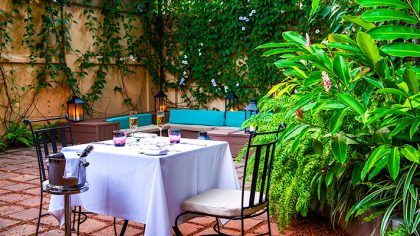
The café is popular with locals, foreign expatriates and tourists and has a cosmopolitan and fun atmosphere with a steady stream of guests throughout the day. At breakfast, lunch and dinner it can get busy and you might have to wait for a table while for the rest of the day it is laid-back and the perfect place to sit down with a good book. Seating comes in a variety of forms: you can either lounge on comfortable sofas arranged around tables or on tables and chairs on the verandah or in a nice quiet garden area at the back where you can sit among leafy green trees and enjoy a bit of fresh air.


Food

The menu is simple offering a mixture of Western and Asian dishes with an emphasis on typical café-style food. You can choose from a selection of sandwiches and pastas. We ordered tuna and smoked chicken baguettes. They came with a side of fries, which was unexpected and welcome. Unfortunately, though, the fries were overcooked and too salty for our taste buds. There was also a nice fresh salad.


© Naren Gunasekera


Drinks

We universally decided to wash the meal down with one of the lesser known brands of ginger beer in Sri Lanka, Lion Ginger Beer. It has quite a distinctive flavor and kick compared to the regular Elephant House Ginger Beer and I highly recommend it to anyone who thinks they can handle it. Pedlar’s has a wide range of fresh fruit juices as well. The café does not have a liquor licence and therefore does not serve beer or wine.


Other

There is free wi-fi for those wanting to check their e-mails and there is also a good shelf of books to keep you occupied while you wait for the food. Parking is limited as you are inside the fort but this is easily walkable if you are staying inside the fort. The food and location is quite child friendly. The café closes on Friday lunch for prayers


© Naren Gunasekera

Exploring the Secrets of the Galle Fort

Posted by Sean Stephen on April 10 th, 2013 in Activities, Culture & Heritage

In my many travels to Galle, I have admired the ancient Fort area and enjoyed the laid-back feel of the place and remnants of the colonial era. While I have read a lot of articles on the place and researched its history, The Galle Fort Walking tour revealed secrets that were hidden in plain sight!
Galle Fort

It was clear when we got to Sri Serendipity, the quirky café owned by our host Juliet Coombs, that we were in the right place. The Coombs family hail from a lineage of merchants who made their home inside the Galle Fort centuries ago and pictures and books telling of the Fort’s history adorned the walls. None of us had actually met Juliet; all we knew was that she was an international reporter who had fallen in love with Sri Lanka and, in the process, had also met the love of her life in the Fort.

Galle Fort

Soon after we arrived, a large group of tourists walked in led by a lady who was dressed in a black outfit complemented by a pair of long leather boots. She would later introduce herself as Juliet Coombs. After a brief introduction and placing our fresh-juice orders in advance, we were off. Juliet was attired in one of the most uncharacteristic outfits you’d expect for a walk in a tropical country, but she seemed quite comfortable. It was far from what we were feeling, panting and sweating just to keep up with her pace.

Galle Fort

Juliet showed us that all the walls were entirely made up of fossil corrals and clay! Not only that, she’d later reveal that all the original houses inside the Fort were also made of the same, providing a strong structure that kept houses nice and cool. She also pointed to one of the boats close to the horizon and said that before the tsunami of 2004 hit the Southern coast, the waters receded that far out, revealing 26 shipwrecks – vestiges of the fort’s defences. We then were guided to a few of the ammunition stores which housed cannons, gunpowder and even shells. They might seem pretty ancient, but according to Juliet a few of them still house live ammunition and gunpowder, so a word of caution to all smokers. Taking a break from the fortress walls, we made our way through Church Road where the rich aromas of street foods filled the air and merged with the smells of burning incense sticks close to the mosque. Juliet told us that the mosque that sits on Church Road is believed to have been a church that was later converted into a mosque. I don’t doubt it as architecturally it doesn’t look like any mosque I have seen before. We later visited one of the many museums in the Galle Fort where we saw how semi-precious stones were still cut traditionally. And looked through some of the ancient crockery, and cooking utensils brought in during colonization.

Galle Fort

Before we ended our walk, Juliet stopped abruptly at what seemed to be an ordinary postbox. It turned out that this post box is a George V Royal Mail box, made out of one block of stone. The sturdy box weighed at least a ton and all our efforts to try and lift it were futile. After our long, yet thoroughly exciting walk, we headed back to Sri Serendipity where we asked questions and continued our discussion on the Fort over the drinks we had ordered earlier.